New PhD student in Warsaw, Poland
We are happy to welcome Gonzalo Rojas – a new PhD student in Nicolaus Copernicus Astronomical Center, Warsaw, Poland.


We are happy to welcome Gonzalo Rojas – a new PhD student in Nicolaus Copernicus Astronomical Center, Warsaw, Poland.
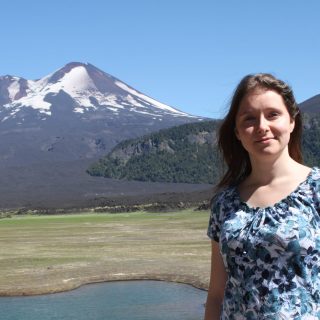
We are happy to welcome a new post-doc fellow in Universidad de Concepción, Chile.

Today we are celebrating with our colleague Darek Graczyk, who obtained the title of doctor habilitated!

An international team of astronomers within the Araucaria Project measured the distance to the Large Magellanic Cloud (LMC) with an exceptional accuracy of 1%.
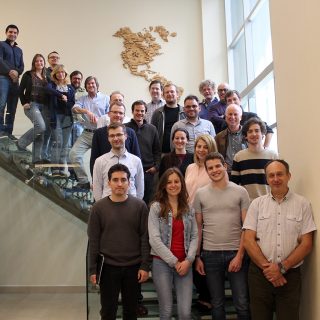
The Araucaria Meeting is a biennial event that brings together astronomers from Poland, France, Italy, Germany, the USA, and Chile, who work on the calibration of the cosmic distance scale and related topics.
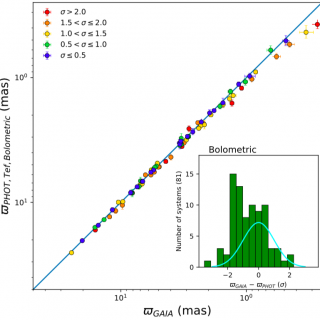
Measurements of parallaxes of 81 detached eclipsing binary stars in the Milky Way allowed for the determination of the global zero-point shift in the Gaia Data Release 2 (DR2) parallaxes.

Applications are invited for one postdoctoral position at the Nicolaus Copernicus Astronomical Center (NCAC), in Warsaw, Poland, in the field of extragalactic distance scale.
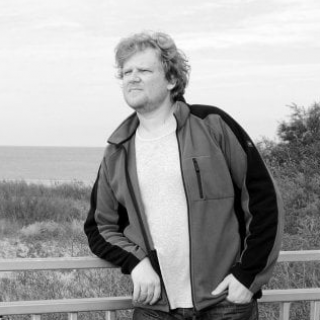
With great sadness we inform that the Araucaria’s member, Zbigniew Kołaczkowski, passed away on September 22, 2018.

Metallicity is a vital parameter that impacts classical Cepheids’ luminosities. In all observed bands, metal-poor Cepheids in the SMC are intrinsically fainter than their more metal-rich counterparts in the LMC and MW.

Based on new observations and improved modeling techniques, we have re-analyzed seven Cepheids in the Large Magellanic Cloud.