The Araucaria Book now available online
In 2021 we’ve been busy working on a book that would summarize and highlight Araucaria’s most important scientific endeavours and their importance in the context of the extragalactic distance scale.

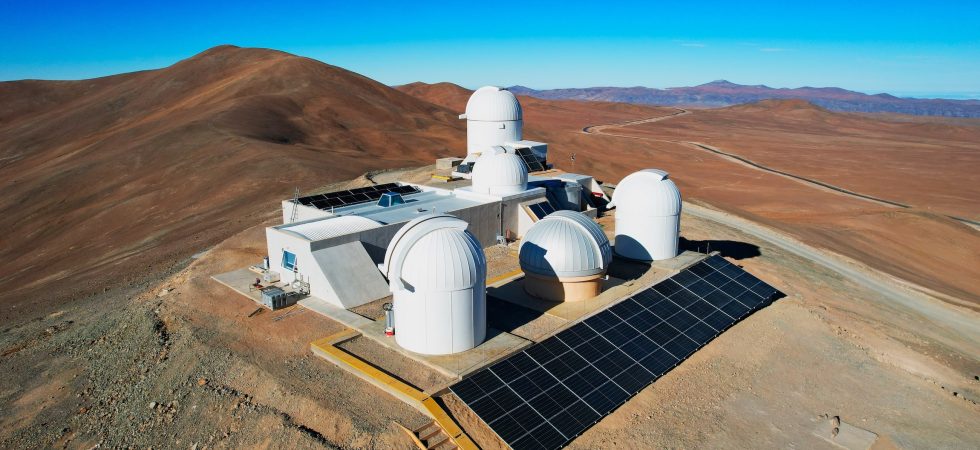
A prestigious European Research Council Proof of Concept grant was awarded to the project „Toward Autonomous Observatories” lead by prof. Pietrzyński and the IT team from the Araucaria Project.
In 2021 we’ve been busy working on a book that would summarize and highlight Araucaria’s most important scientific endeavours and their importance in the context of the extragalactic distance scale.

We are happy to welcome Michał Radziwonowicz in Nicolaus Copernicus Astronomical Center, Warsaw, Poland.

We have an open position for a data manager in the field of telescope automation

We are happy to welcome dr. Henryka Netzel in Nicolaus Copernicus Astronomical Center, Warsaw, Poland.

We are happy to welcome dr. Frederic Marcadon in Nicolaus Copernicus Astronomical Center, Warsaw, Poland.

We are happy to welcome dr. Ricardo Salinas in Nicolaus Copernicus Astronomical Center, Warsaw, Poland.

Type II Cepheids might be an attractive alternative to classical Cepheids regarding the projection factor (p-factor), which is a crucial parameter in the Baade-Wesselink technique to determine the distance.

This year the extended Araucaria group met at the Observatoire de Paris, France, where the members presented their recent projects and discussed the future of the extragalactic distance scale.

Newly discovered nine binary systems consisting of two Cepheids shed more light on the evolution of multiple systems, and reveal their merger origin.

An early-type eclipsing binary turns out to be a hierarchical quadruple system. Analysis of its complex configuration, although not easy, yields masses, radii, and temperatures of the inner binary, and mass estimations of the two outermost components.

It was… Falcon 9 😉